


SERVING WEST VIRGINIA, TOGETHER | An op-ed by Mayor Amy Shuler Goodwin
Last week, Charleston had the opportunity to welcome municipal leaders from across the Mountain State for the West Virginia Municipal League Annual Conference.
For a few days, mayors, council members, city managers, clerks, attorneys and municipal employees came together to share ideas, talk through challenges and hear what’s working in communities across our state. And, I was reminded again why those relationships matter.
Because what happens when municipal leaders come together is about much more than conference sessions and policy discussions.
There is another side of this work that most people never see.
We gather around one another when tragedy strikes. We check on each other when a community is hurting. We call, text and ask: What do you need? How can we help?
Mayors and municipal leaders are often among the first people called when something bad happens—a fire, a flood, a terrible accident, an act of violence or the loss of a community member.
And in local government, those moments are deeply personal.
We live in the places we serve. We shop at the same grocery stores, attend the same community events and send our children to the same schools. When tragedy happens, chances are we know the people involved. We know their families. We know the first responders who answered the call. And while helping our communities through difficult moments, we are often grieving right alongside them.
That’s something municipal leaders understand about each other in a way few others can.
I’ve watched mayors and city team members quietly gather around a colleague going through an unimaginable day— because that’s what we do for each other.
That same sense of connection carries into the work we do every day.
Whether you represent one of our largest cities or smallest towns, many of the challenges are the same. We’re all working on infrastructure, housing, neighborhoods, public safety and ways to support the people and businesses in our communities.
And the work never really stops.
Municipal government doesn’t operate from 8 to 5, Monday through Friday. The phone rings in the middle of the night. Problems happen on weekends. Water lines break on holidays. And storms don’t check the calendar before they arrive.
Municipal leaders and employees give up dinners, weekends, holidays and time with family and friends because their communities need them. They do it because they love their communities and love serving—even on the really hard days.
But they don’t have to do that work alone.
Somewhere in West Virginia, another community has probably faced a similar challenge. The Municipal League gives us a way to share those experiences, learn what has worked—and what hasn’t—and help each other find a way forward.
This year’s conference gave us an opportunity to build on that idea by launching West Virginia Women in Municipal Government, a statewide network for women in municipal government to connect, mentor and support one another.
And during the conference itself, we saw exactly why these municipal relationships matter.
We learned of a need for additional assistance with flood recovery efforts in Lewis and Upshur Counties. Charleston had resources to help—so we did.
We sent a Street Department crew with two trucks, along with two mechanics and a service truck, to assist with debris removal.
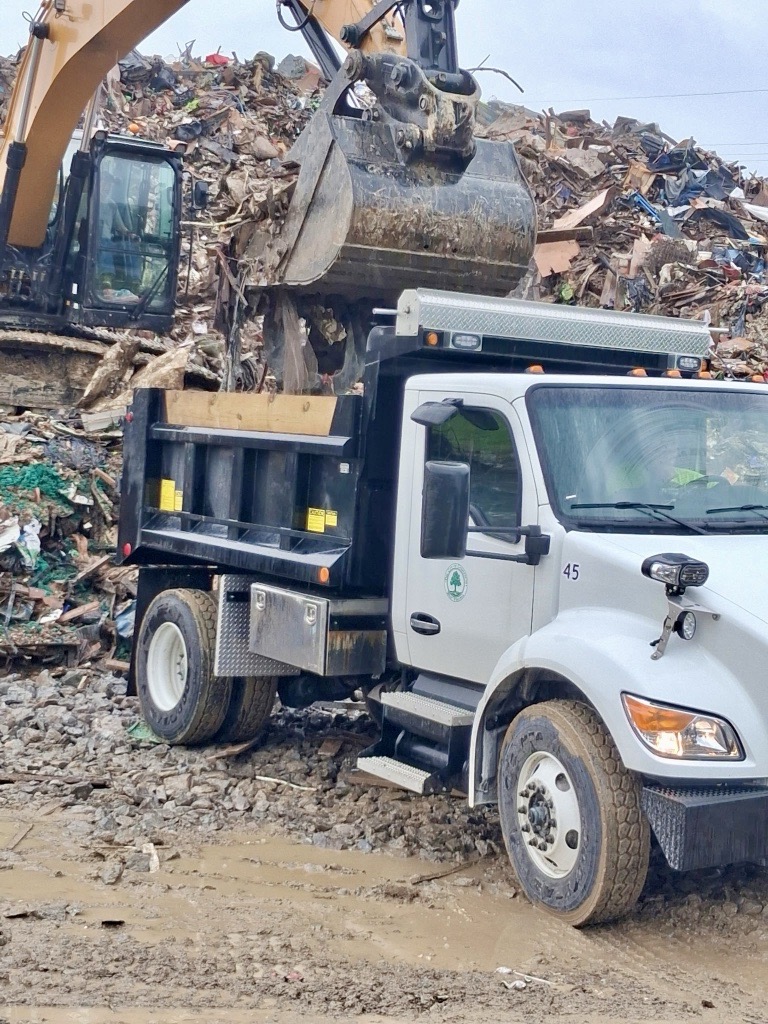
A West Virginia community needed help, and we had people and equipment that could help them. So—we showed up.
That’s what strong relationships among our municipalities look like.
Serving as President of the West Virginia Municipal League has given me an even greater appreciation for the people doing this work across our state. I’ve watched them solve problems with limited resources, celebrate victories in their communities and stand shoulder-to-shoulder with their neighbors during their darkest days.
Most of that work will never make a headline. But it happens every single day in cities, towns and villages across West Virginia.
Because at the end of the day, we aren’t just a collection of individual municipalities. We are neighbors.
And when West Virginia’s cities and towns work together, support one another and show up for each other, we all benefit.
###